
The Government Is Hiring Influencers. We're Not Joking
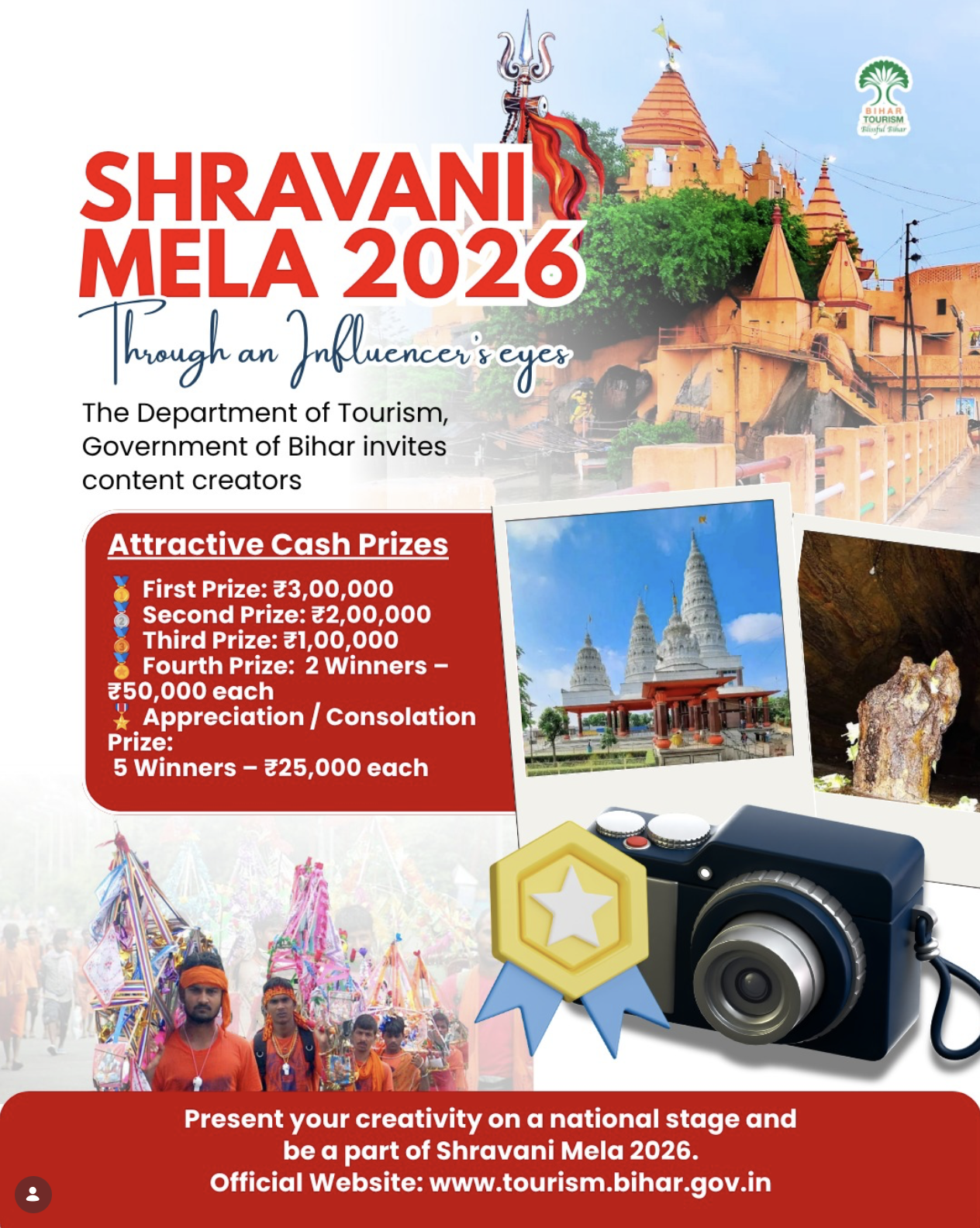
Here's something you probably didn't have on your 2026 bingo card: the Bihar government launching an influencer contest, offering ₹3 lakh in prize money for the best video promoting Shravani Mela.
Yes. The government. Reels. Cash prizes. Creator economy.
And honestly? It's about time.
The Brief Nobody Expected
Bihar's Tourism Department just kicked off a campaign called "Ek Influencer Ki Nazar Se" - Through an Influencer's Eyes, inviting content creators to document the Shravani Mela, one of India's largest religious gatherings that draws 40 lakh+ devotees annually on a 105km pilgrimage from Sultanganj to Deoghar.
The top creator walks away with ₹3 lakh. Others win across categories. The government gets authentic, creator-led content spreading across Instagram, YouTube, and beyond.
It's not the first time Bihar has done this — they ran a reel-making contest in 2024 too. But this one's bigger, better timed, and signals something worth paying attention to: governments are finally treating creators like the media channels they actually are.
This Isn't an Isolated Move
Bihar isn't alone in figuring this out.
Kerala Tourism bounced back hard after the pandemic by partnering with travel influencers to showcase the state's offerings — reaching millions of social media users and translating that into a real surge in footfall. The campaign worked because it didn't feel like a government PSA. It felt like a travel vlog you actually wanted to watch.
UP Tourism collaborated with travel vloggers and devotional influencers around Ayodhya's Deepotsav — posts and live streams racked up millions of views, with viewers actively expressing intent to visit in the comments.
Ministry of Tourism has even built a formal database of influencers and creators as part of its Incredible India digital strategy — which tells you this isn't a one-off experiment. It's infrastructure.
So Why Does It Actually Work?
Simple. India has 700 million+ internet users, 50% of mobile engagement is centered on social media, and the influencer marketing industry is projected to hit ₹3,375 crore by 2026. The audience governments want to reach isn't watching Doordarshan. They're watching reels.
A travel creator with 200K followers documenting the Kanwar Yatra with an honest, immersive vlog does more for Shravani Mela's visibility than a government TV ad ever could. Because it doesn't feel like outreach. It feels like a recommendation from someone you follow.
That's the whole game.
But Here's Where It Gets Tricky
Government campaigns come with baggage that private brands don't carry.
Authenticity is fragile territory. The moment a creator's content starts to feel like a press release with good lighting — audiences clock it. Government briefs tend to be rigid, approval-heavy, and very allergic to anything that doesn't sound official. That's the opposite of what makes creator content work.
There's also the question of creative freedom. The best influencer campaigns happen when brands trust creators to speak in their own voice. Governments, understandably, are more cautious. That tension needs to be managed very deliberately, or the content ends up being the most beautifully shot version of a boring announcement.
The Verdict
Can government campaigns use influencer marketing effectively? Yes — and Bihar's Shravani Mela contest is proof that the appetite is finally there.
But the ones that'll actually work are the ones that resist the urge to control every frame. Give creators a real brief, real access, and real creative latitude — and let them do what they do best: make content people actually want to watch.
The government has the story. Creators have the audience. When those two things meet without a 14-page approval chain in the middle, something genuinely good can happen.
