
The Rise of “Unexpected Collaborations” in Marketing
Lately, some of the biggest marketing conversations online have come from collaborations that honestly make no sense at first glance. A skincare brand partnering with a cricket team. A sneaker brand collaborating with a mithai company. A grooming brand entering esports.
And weirdly enough, that’s exactly why they work.
People today are tired of seeing the same predictable influencer campaigns and safe celebrity endorsements again and again. Audiences scroll past traditional ads so fast now that brands almost need to shock people into paying attention. Unexpected collaborations do that naturally. They feel fresh, random, and interesting enough to make people stop and talk.
One of the biggest reasons brands are moving towards these partnerships is because they open doors to completely new audiences. A beauty brand collaborating with cricket teams suddenly becomes part of sports conversations. A grooming brand entering gaming culture instantly becomes relevant to Gen Z audiences that may never engage with traditional ads. Instead of staying limited to their own niche, brands are borrowing each other’s fandoms and communities.
And honestly, the surprise itself becomes the marketing. When people see two industries collaborating that seem completely unrelated, they naturally repost it, meme it, and discuss it online. The internet loves things that feel unexpected.
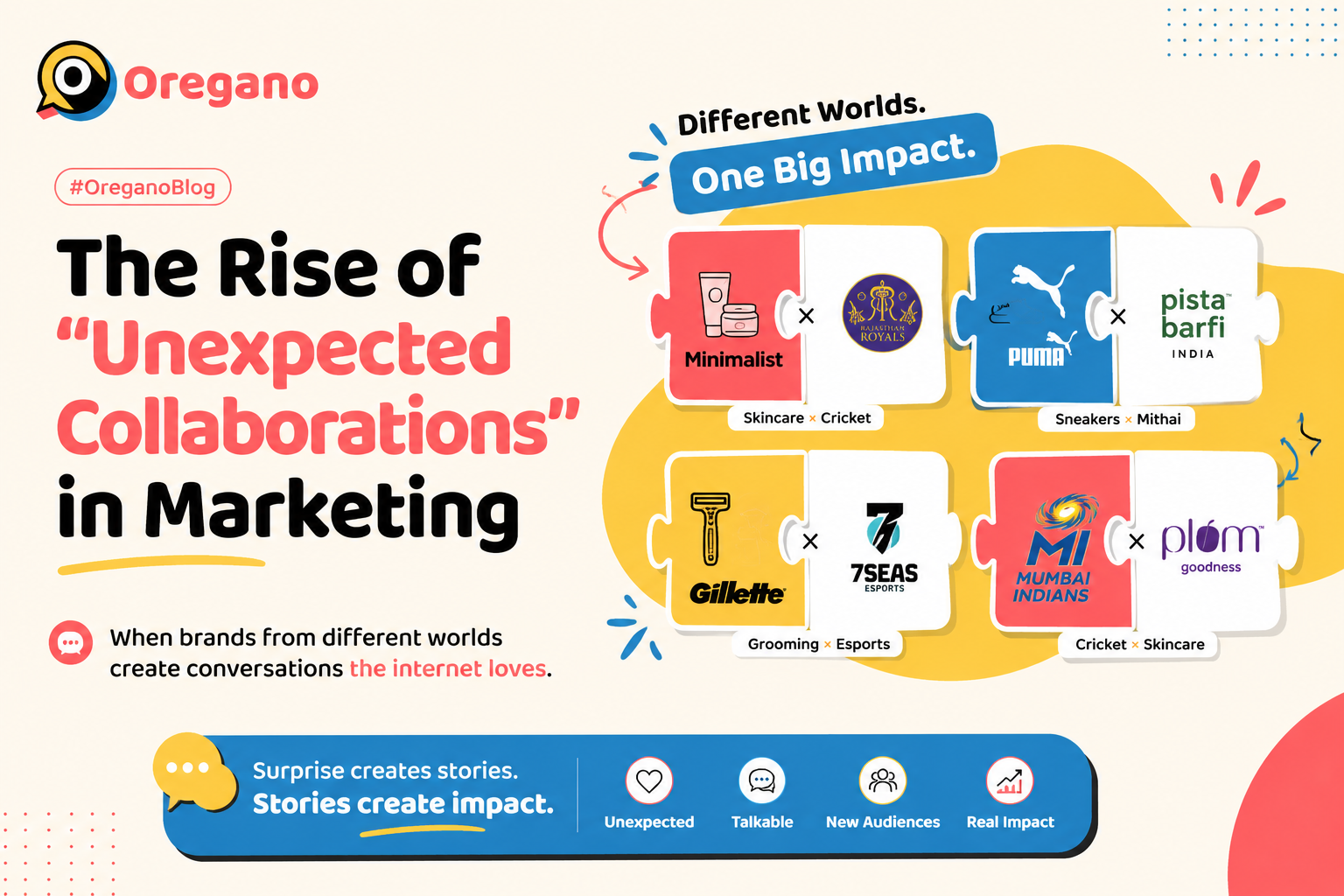
A good example of this is beauty brands entering sports culture. Collaborations like Minimalist × Rajasthan Royals or campaigns like MI × Plum show how skincare brands are trying to move beyond traditional beauty audiences. Plum especially used cricket in a smart way — by featuring Mumbai Indians players using skincare products in reels and videos, the brand helped normalize skincare for men as well. Since audiences already admire cricketers as role models, the messaging felt far more natural and relatable than a regular skincare advertisement.
Another example is Gillette × 7Sea Esports. A few years ago, a grooming brand partnering with a gaming team would have sounded random, but now it makes complete sense. Gaming communities are huge online, especially among Gen Z consumers. Instead of feeling like a corporate ad, the collaboration felt more like entertainment through tournaments, livestreams, creators, and gaming culture itself.
Then there’s Puma India × Pistabarfi, which became one of the most talked-about collaborations simply because nobody expected a sneaker brand and a mithai company to work together. But the partnership clicked because both brands connected through nostalgia and visual storytelling. It felt playful, fresh, and extremely internet-friendly — the kind of collaboration people share because it’s fun to talk about.
What really makes these collaborations work is that they make brands feel less corporate and more culturally aware. Instead of aggressively trying to sell products, brands are becoming part of internet conversations and communities people already care about.
And in today’s marketing culture, that matters more than polished advertising. Because people may forget a traditional campaign in seconds, but they remember the collaborations that made them stop scrolling and say, “Wait… this is actually interesting.”
